Attending to the nuance of children’s responses enables teachers to figure out what children understand and what questions and supports can help them extend their thinking. Figuring out which questions
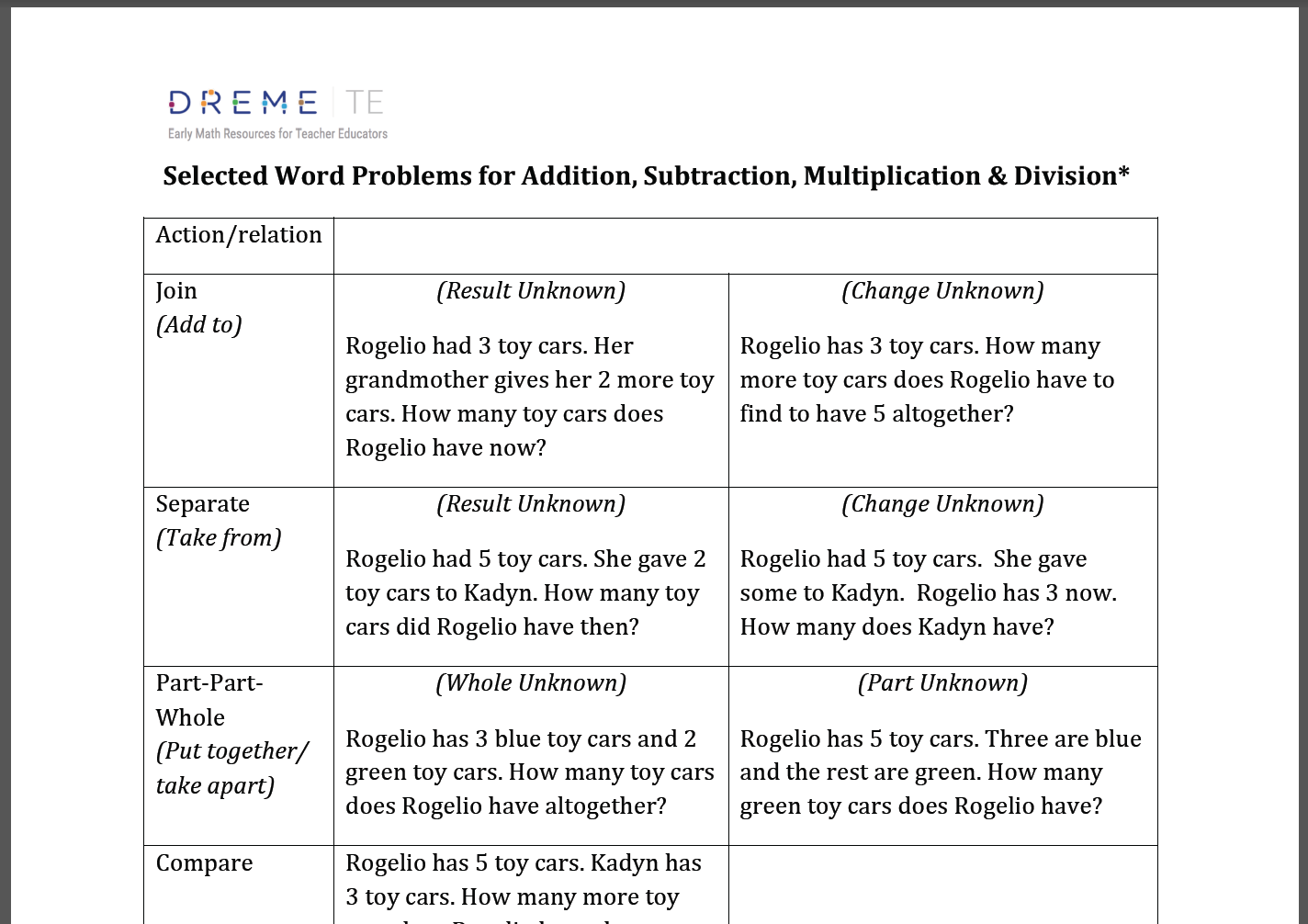
We describe some ways you might engage participants in these problem types to help them see the range of problems, how they might be easier or more difficult for young
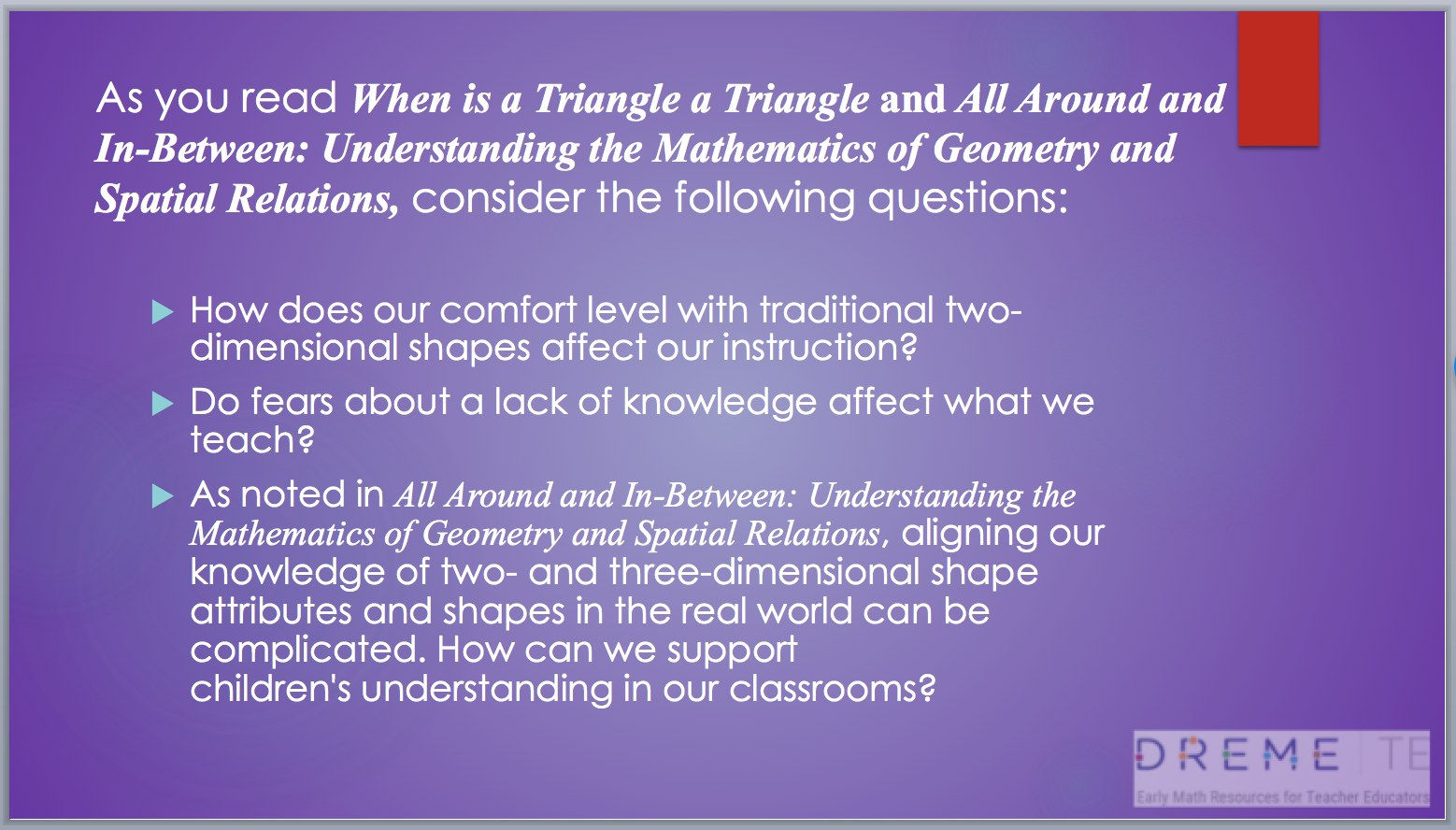
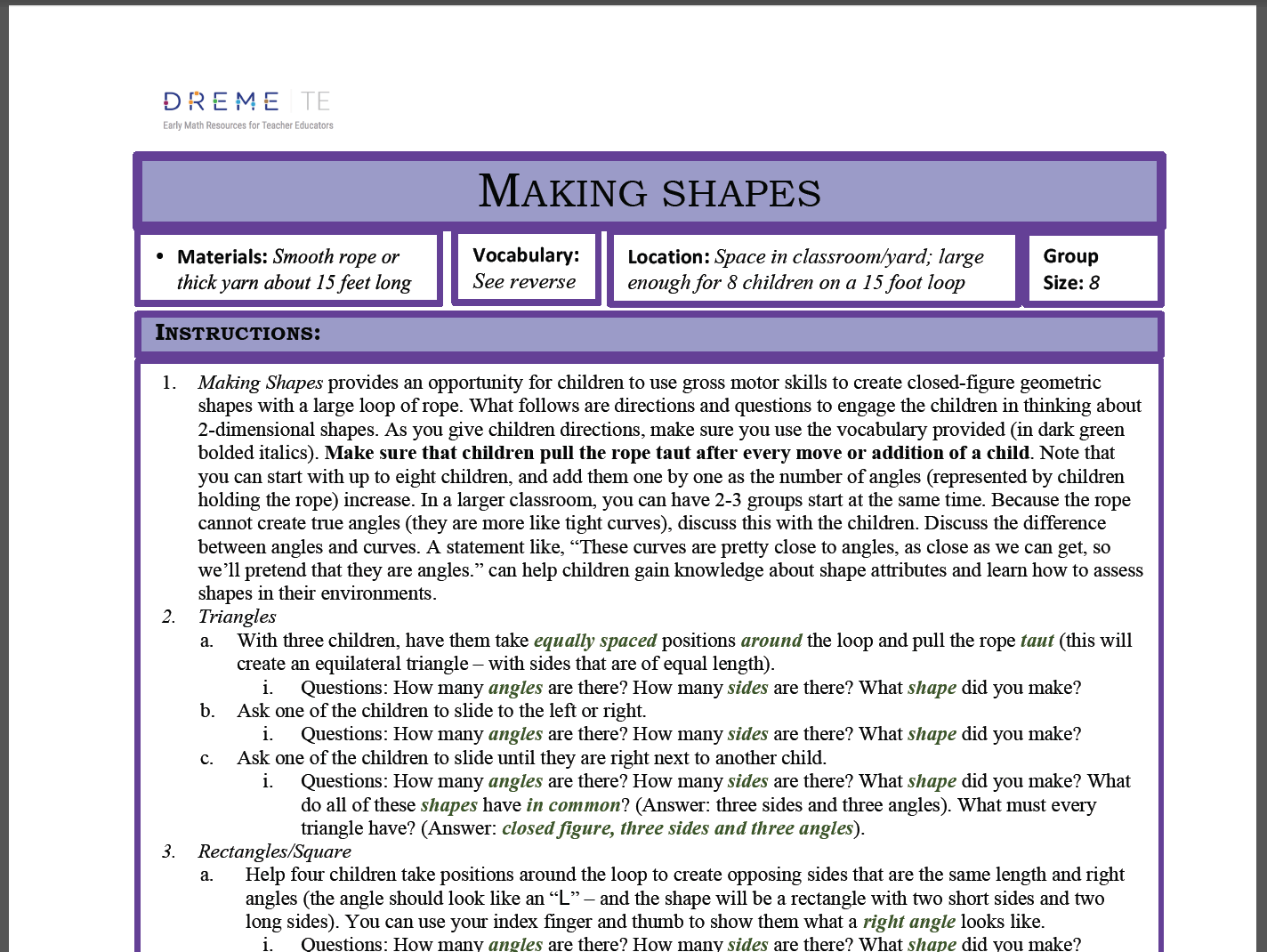
This activity provides participants with an opportunity to explore the attributes of 2-D geometric figures (similar to how one would engage children), and to explore their own beliefs and attitudes
This resource is designed to engage your participants in learning about shape. The basic idea is to help your participants gain some insight into the challenges children face in learning about shape.
This resource provides an overview of how teacher educators can engage participants in Describe, Draw, Describe (DDD). The components have been developed to provide support for connecting children’s ideas about spatial
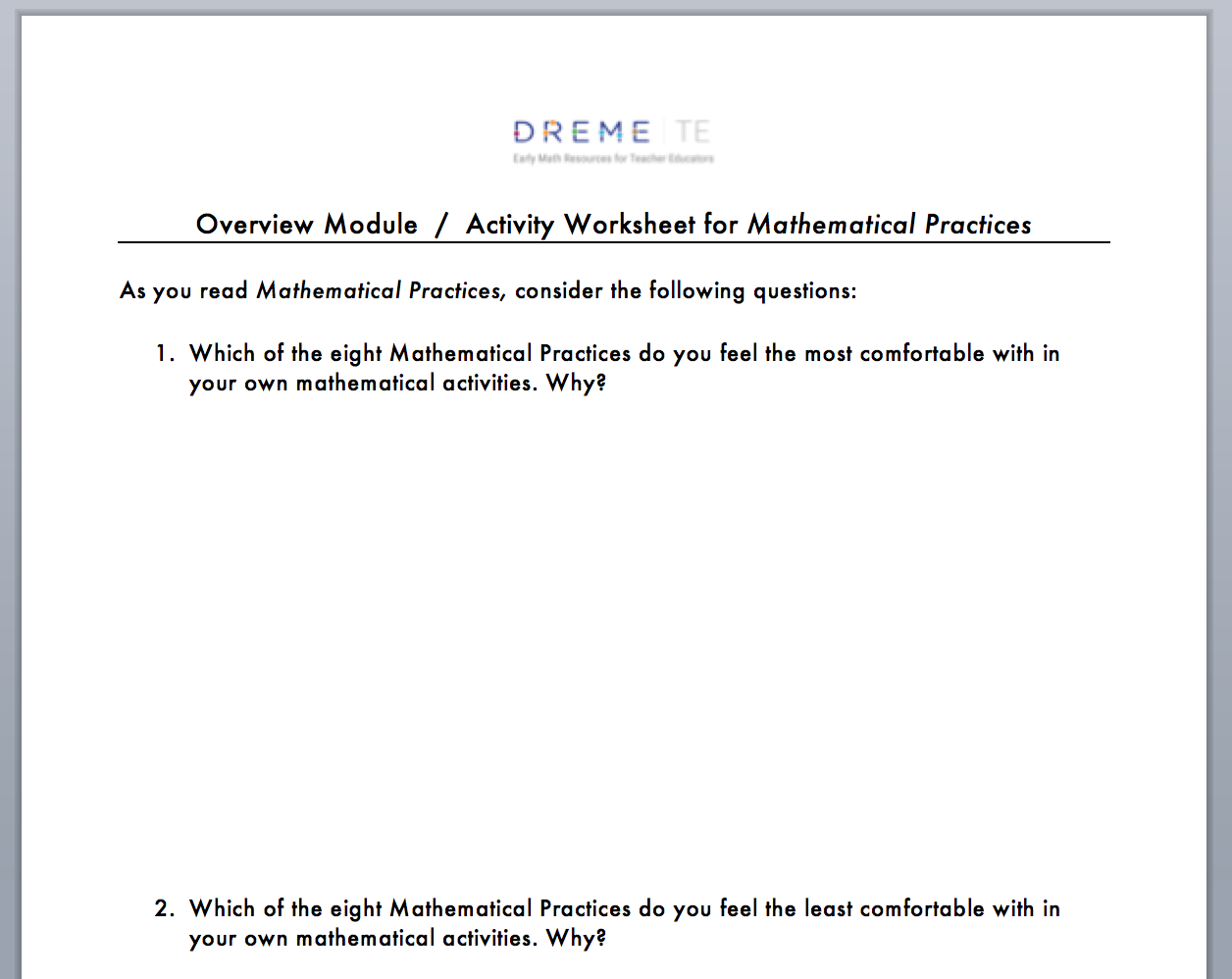
This activity supports facilitating Common Core Mathematical Practices in the classroom. It provides teachers with an opportunity to explore how the Mathematical Practices work in their own lives, and how
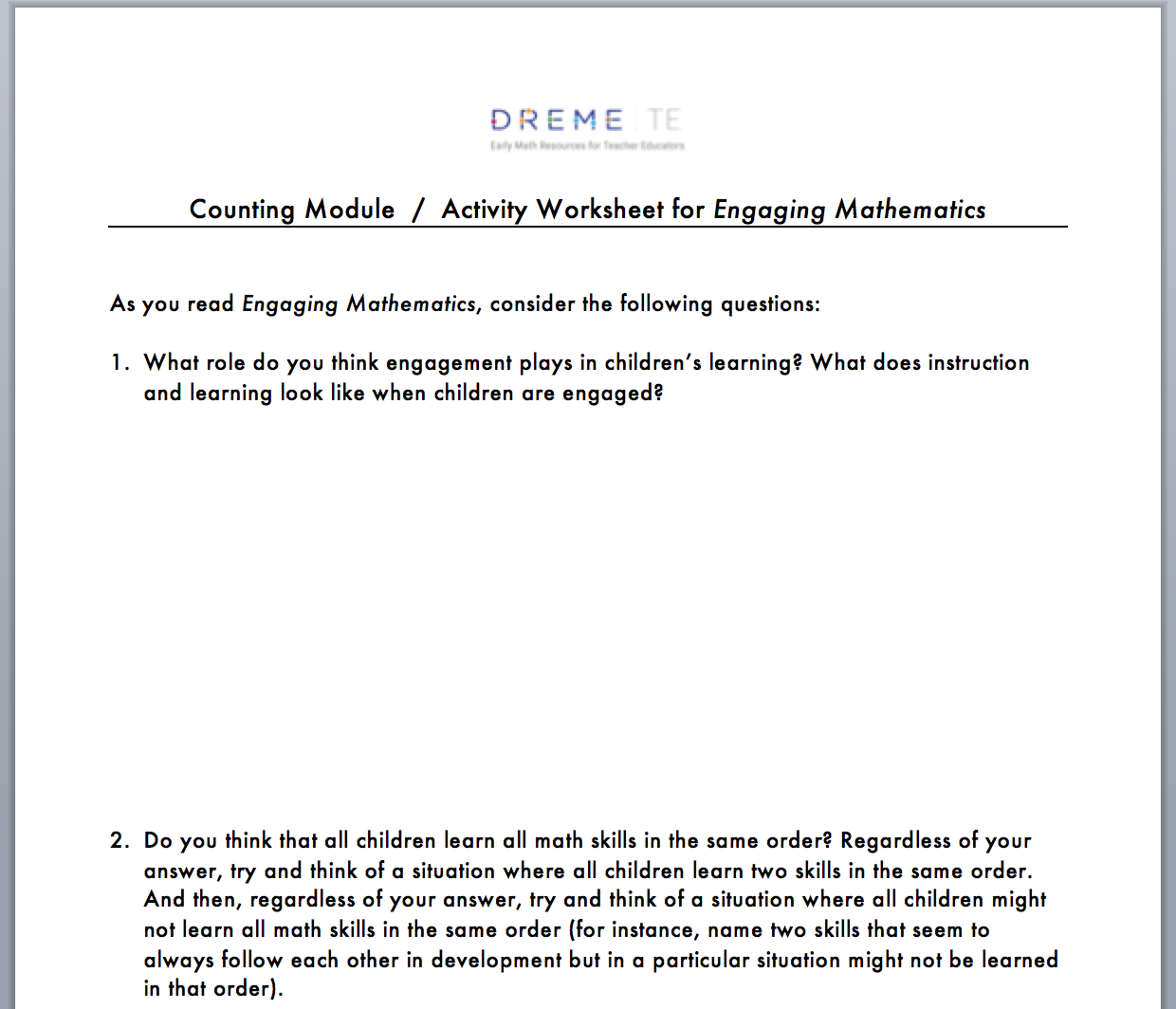
This activity addresses beliefs and attitudes about mathematics teaching and learning in the early childhood classroom. Although unseen, beliefs and attitudes directly affect how teachers support mathematical development in their
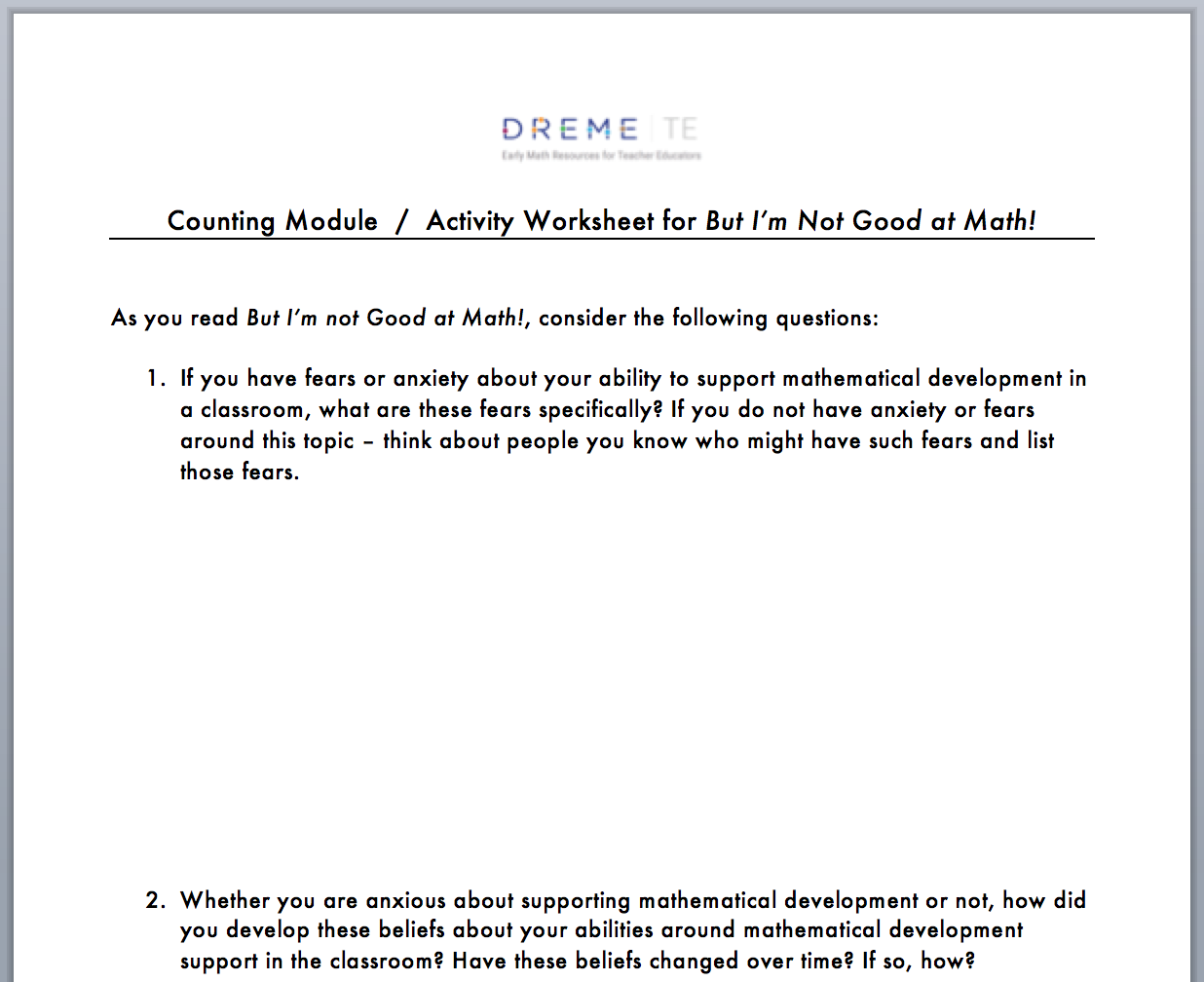
This activity addresses beliefs and attitudes about teachers’ own mathematical skills and their effects on classroom teaching. Beliefs and attitudes directly affect how teachers support mathematical development in their classrooms.
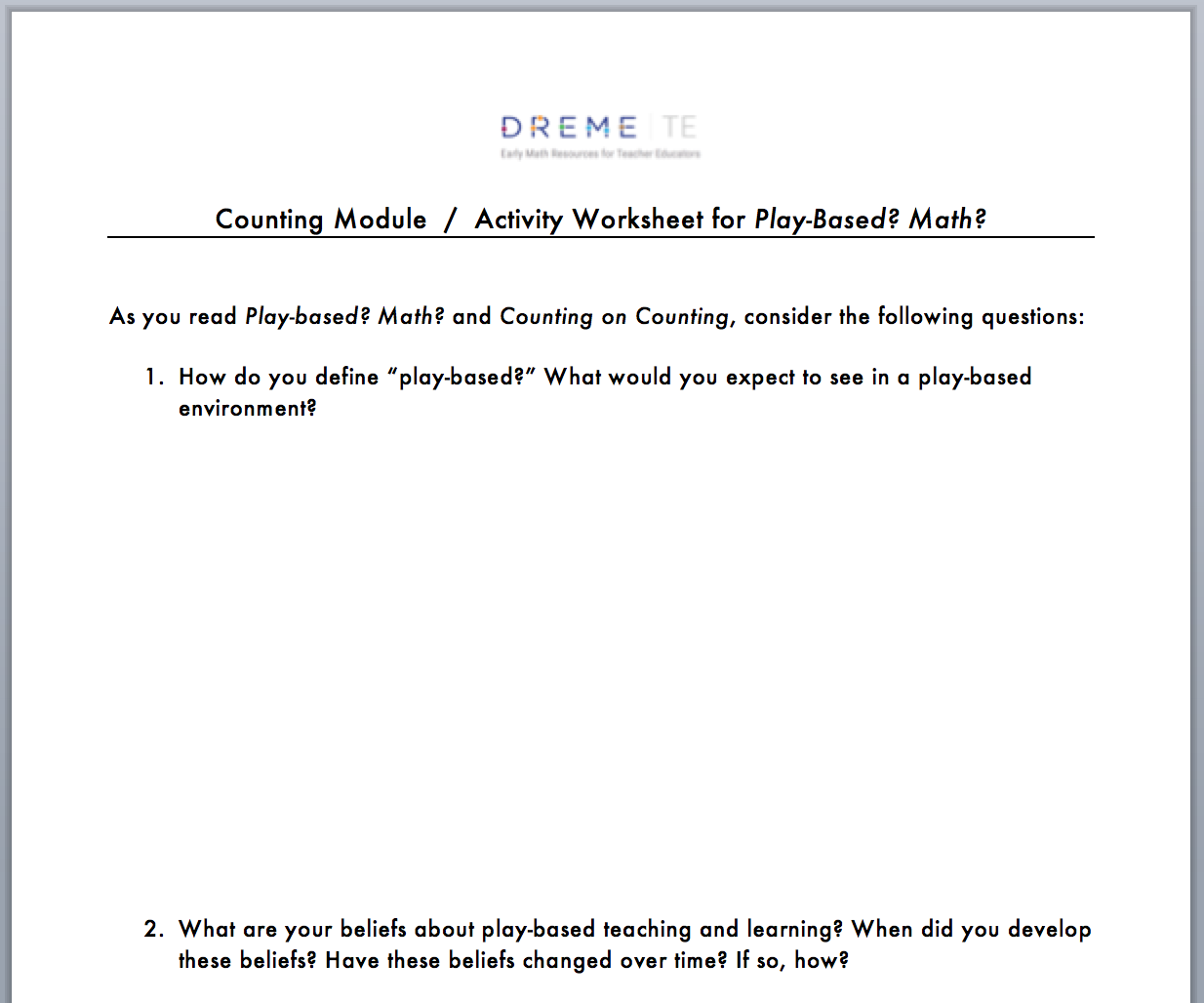
This activity accompanies the “Play-Based? Math?” vignette to address beliefs and attitudes about mathematics teaching and learning in the early childhood classroom. This activity will help teachers examine their role in mathematics