

Activity for Teacher Educators
Children notice. They notice regularity and irregularity. They like to tell you what they noticed. Supporting teachers to find ways to support children to talk about what they notice is the beginning of work on patterning.
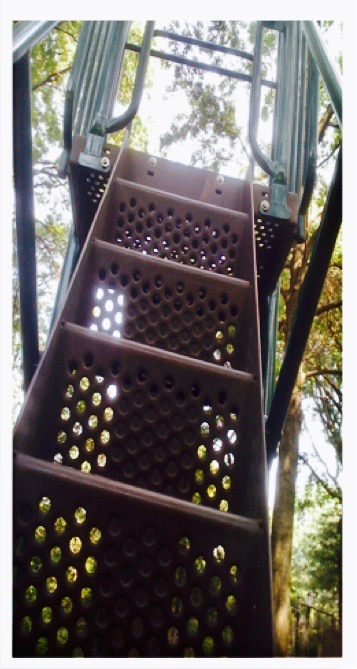
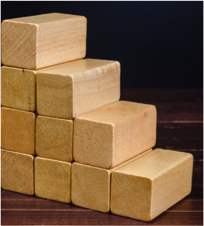
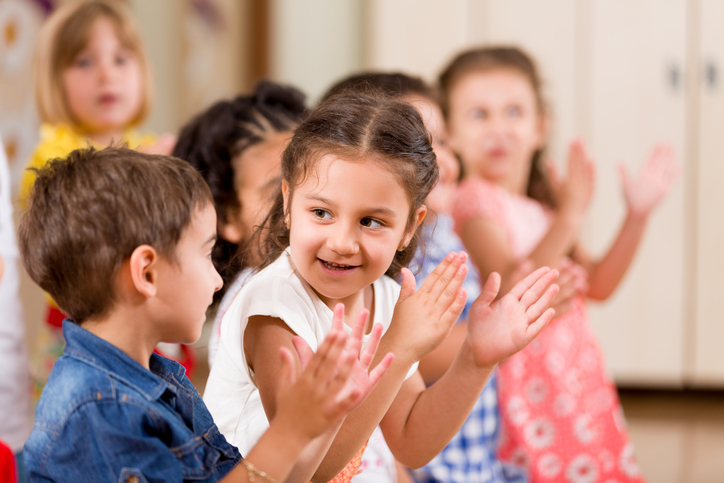
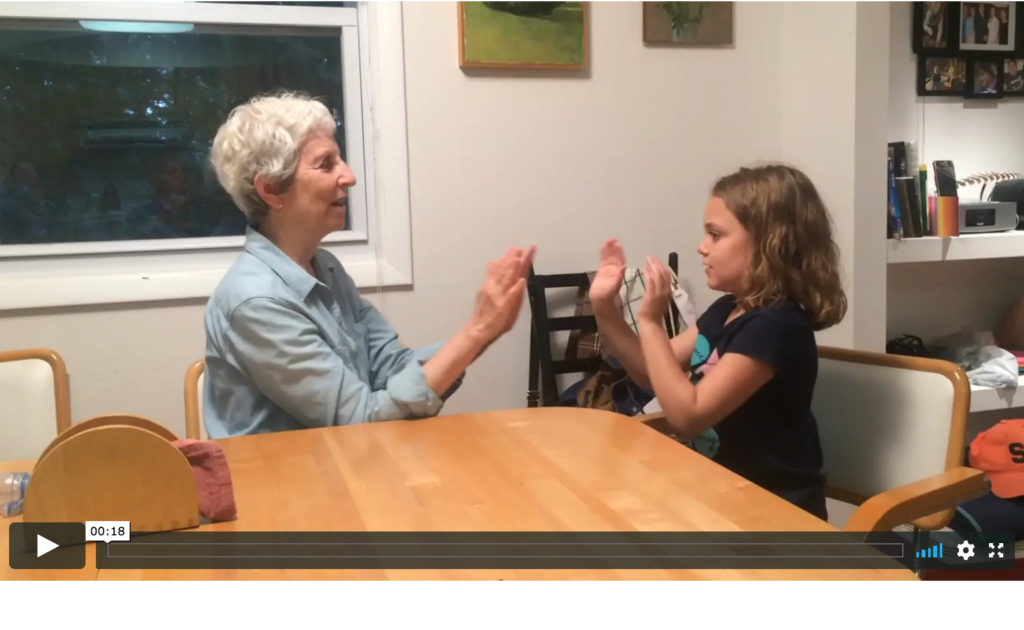
Choose an image.
You can use one of these or one of your own. You could even choose an image of the school or the play yard.

Examine the image.
Ask participants to take one minute and examine the image to see what they notice (actually take the whole minute as the longer time will support them to see more).
Ask participants to share what they notice either with a partner or with the group.
Following their sharing, change the task to ask them to examine the image again and consider what young children will notice. Have the pairs or small groups share out to the whole group. Remember the goal here is to focus on pattern. There is much to notice in the images about regularity. You want a wide range of what children will notice to emerge so that participants are open to the range of possible responses from children.
Remember.
Any and all ideas shared are valued and supported. Working on this activity with participants will provide them with the opportunity to explore what engaging children around the images looks, sounds and feels like so that they can support exploration and idea generation in their own classrooms. Remember that the goal here is to focus on pattern. There is much to notice in the images about regularity.
Dual-Language Learners.
Often as teachers we worry that children will not have the language to engage in an activity like this one that requires describing. What we have found is that when the teacher does not speak the children’s native language, they can let children get started on this activity, allowing them to say what they notice in any way that they want (incomplete sentences, phrases, incorrect grammar, informal language, non-mathematical terminology). This approach will support the development of language. If a teacher focuses on how to “say it right,” the children are not likely to talk. If opportunities are open and all shared ideas are supported, children will learn from each other about different ways to articulate their ideas.
Discuss.
Why is noticing important for young children? What do you hope children will say? Consider what you read in Pattern, Pattern, Everywhere and Patterns in Everyday Activities. What regularities do you think they will see?
Plan.
How would you pose a What do you Notice with young children? How will you organize the activity, the classroom, and the conversation? What will you ask? Remember it is very important that all children feel that they can offer something they notice; do not communicate that you will accept only “correct” answers. All responses can be productive. How will you help children elaborate on incomplete or hard to understand responses? How will you deal with what might be perceived as non- mathematical language (I see a – gesture round – ball)?
Extend.
Consider this vignette of two preschool teachers reflecting upon asking children what they notice. Watch this Teaching Channel video of the activity Same or Different. How has the class in this example extended the “What do you notice?” activity? What are the children noticing in the video? How could you use this idea in other ways in a preschool classroom?
Resource Type:
Patterns & Algebra
The environment constantly exposes young children to regularities of various types: in music, shirts, dance, shape, and spatial relations. Given…


Overview
Ideas for Engaging Participants
This resource provides a range of ideas that may be useful for teacher educators as they design their professional development…

Patterns & Algebra
Inservice: Getting Started with Patterns
The initial 2-hour session focuses on supporting participants to notice patterns in their environment and consider what young children may…
Patterns & Algebra
“What Do You Notice?” Vignette
This is the story of how Teachers Steph and Maria found out what children notice about patterns and why that…
Patterns & Algebra
A brief overview of the development of patterns and algebraic thinking in young children. Children are born with the ability…

Spatial Relations
In the activity, children are asked to view a picture (simple drawing, storybook page, complex geometrical shape, etc.), and describe what they notice in…
Patterns & Algebra
Patterns in Everyday Activities
There are many daily-life activities in which children engage with mathematical patterns. This handout describes some of these activities.
