Attending to the nuance of children’s responses enables teachers to figure out what children understand and what questions and supports can help them extend their thinking. Figuring out which questions
A vignette about teachers Makayla and Jaden draw on their knowledge of “development” to consider if children’s understanding of operations has an “order” to it.
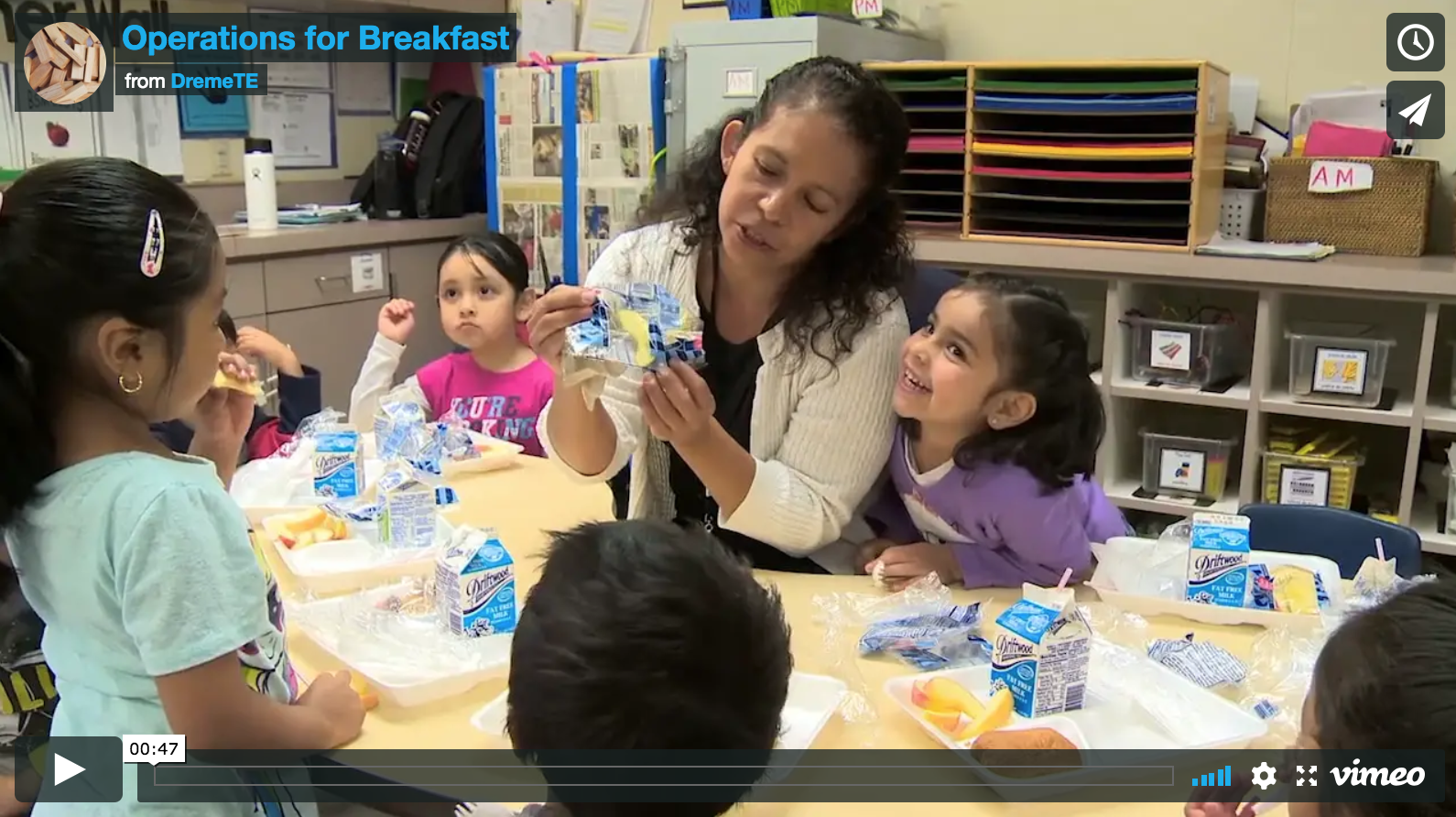
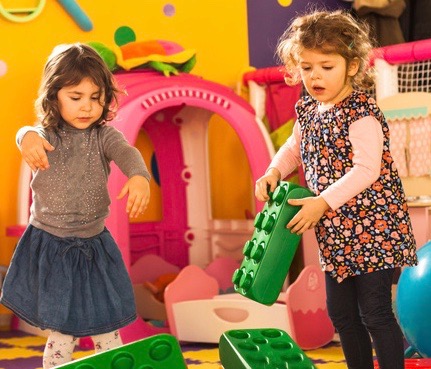
This activity provides participants with an opportunity to explore children’s development in operations as children solve problems that arise through play and interactions throughout the day.
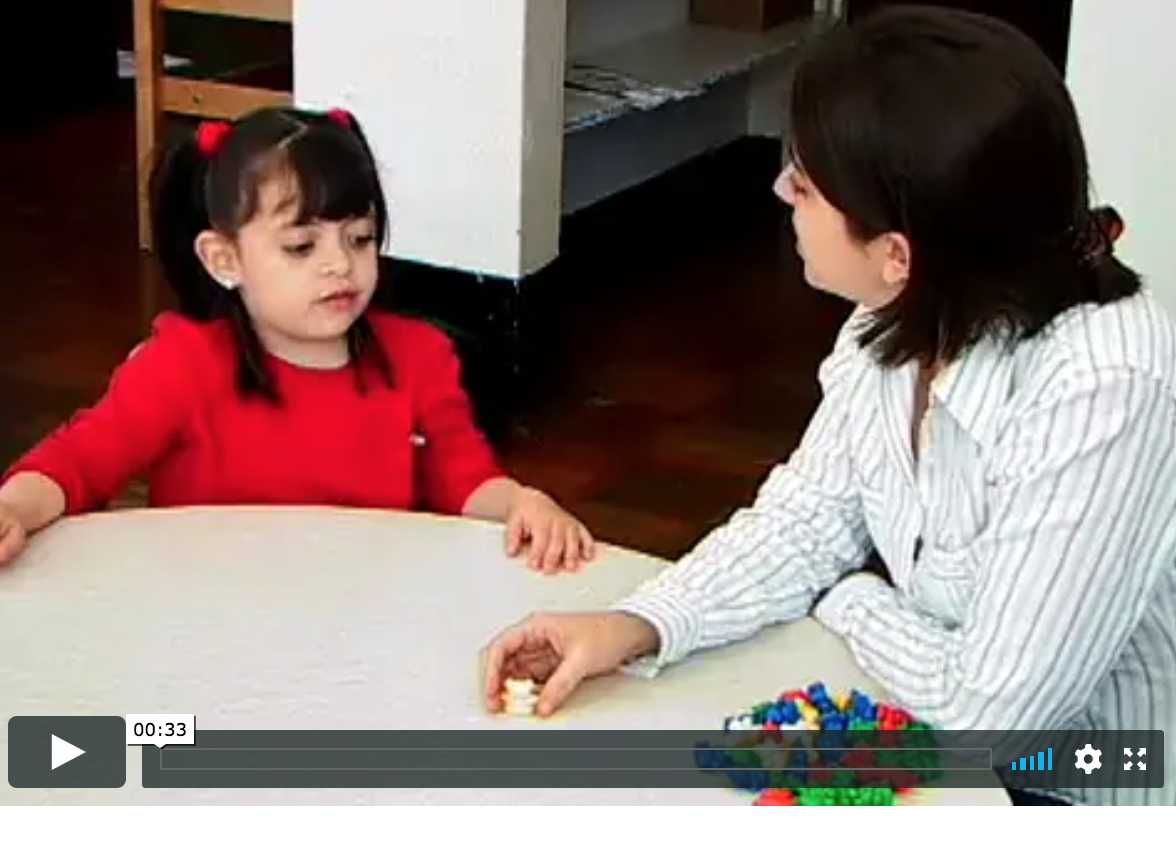
We often think of mathematical development and socio-emotional development as two ships passing in the night, existing in the same ocean but not interacting. But, fair-sharing—the sharing of toys or
This activity provides participants with an opportunity to explore children’s early abilities in fair-sharing and to explore their own beliefs and attitudes about supporting children’s mathematical and socio-emotional development.
These guidelines can provide six or more hours on early mathematics (focus on shapes and spatial relations) in a three-unit semester preschool curriculum course. It can be broken into shorter segments.
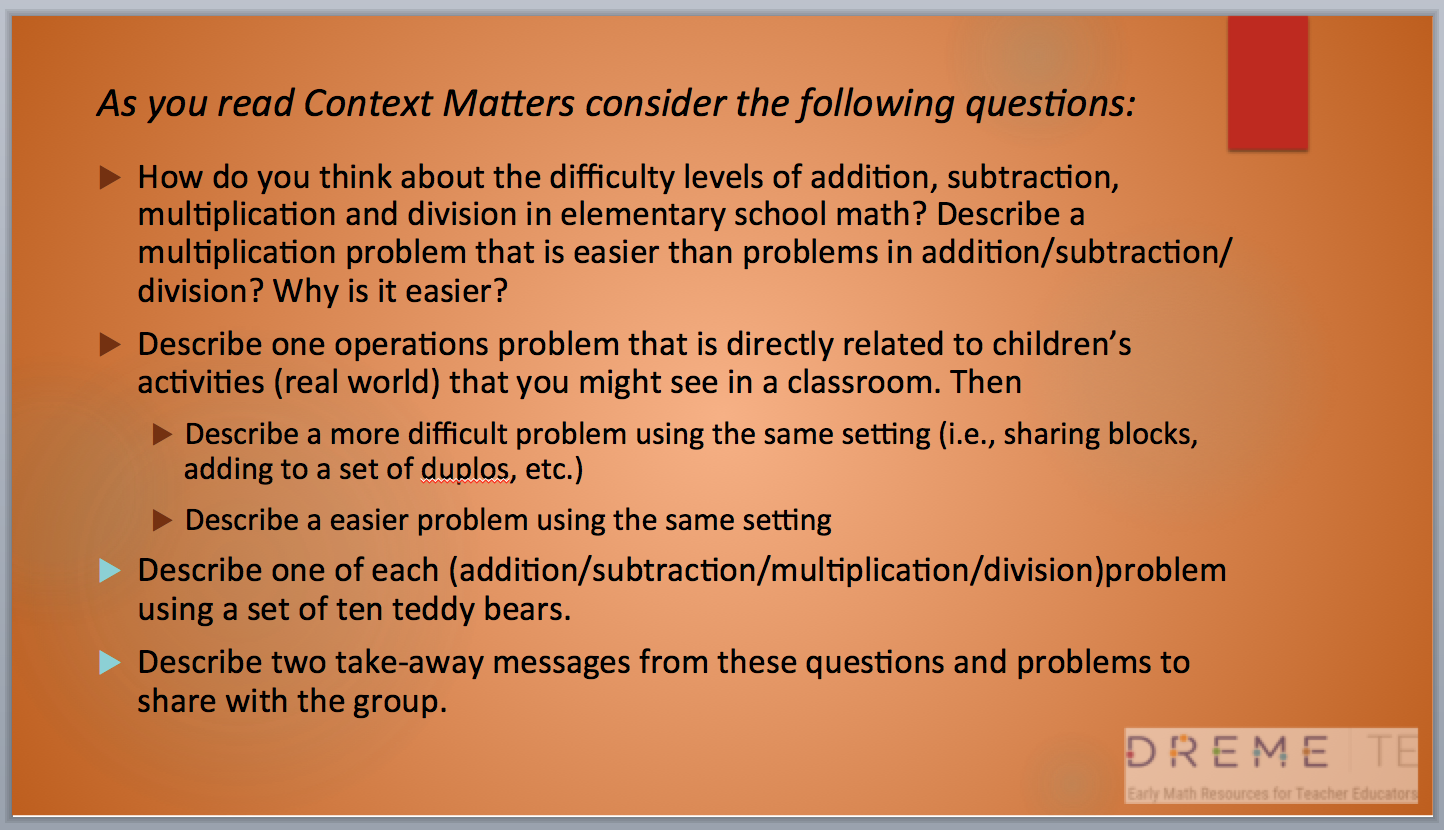
Getting started with solving addition, subtraction, multiplication, and division problems begins by asking teachers to rethink their existing ideas of teaching the operations and providing opportunities for teachers to see that
Patterns can be notoriously difficult to define. This handout provides illustrations of teacher-child interactions that help take apart (and put back together!) patterns to support our understanding of pattern