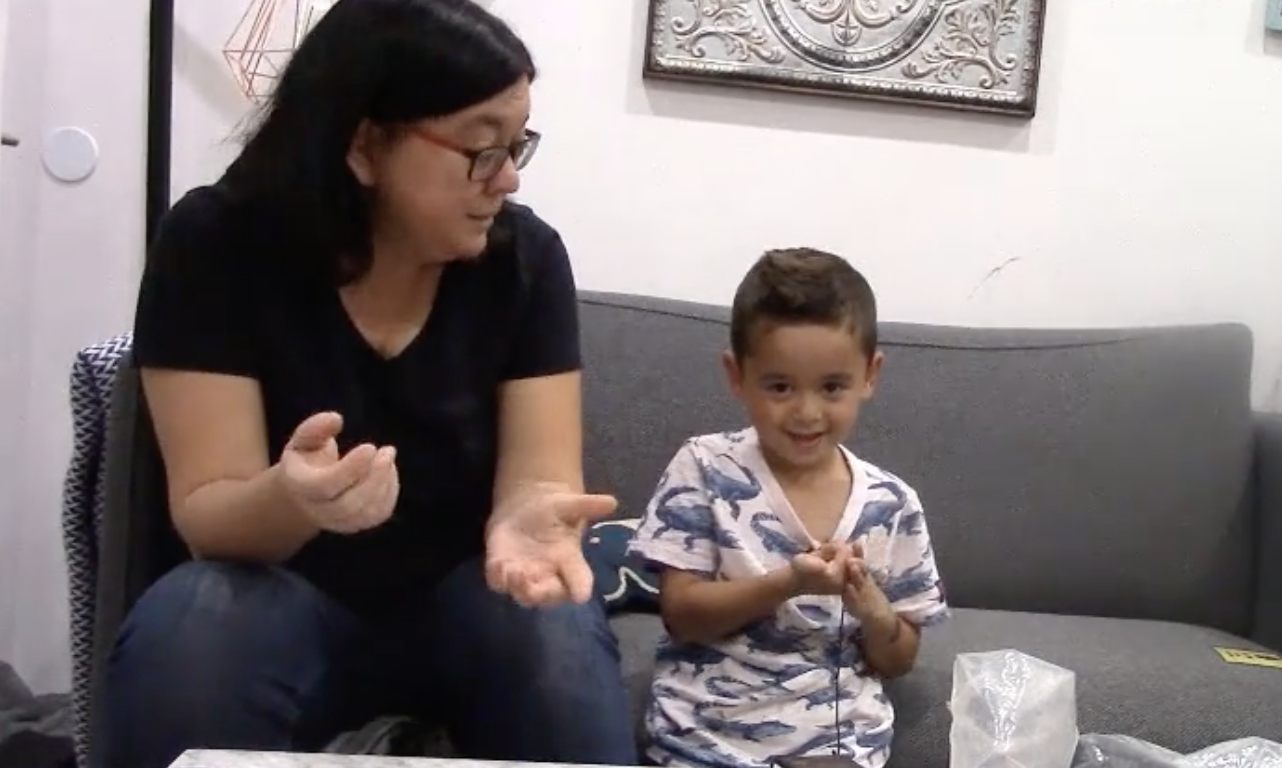
To teach well, you need to understand the individual child’s math knowledge. This document provides guidelines for conducting conversations that can reveal a child’s math thinking and guide your teaching.
This activity supports facilitating Common Core Mathematical Practices in the classroom. It provides teachers with an opportunity to explore how the Mathematical Practices work in their own lives, and how
Supporting Dual Language learners (DLLs) in our classroom is a valuable opportunity to focus on the importance of language, think beyond the math, and provide for mathematical sense making in
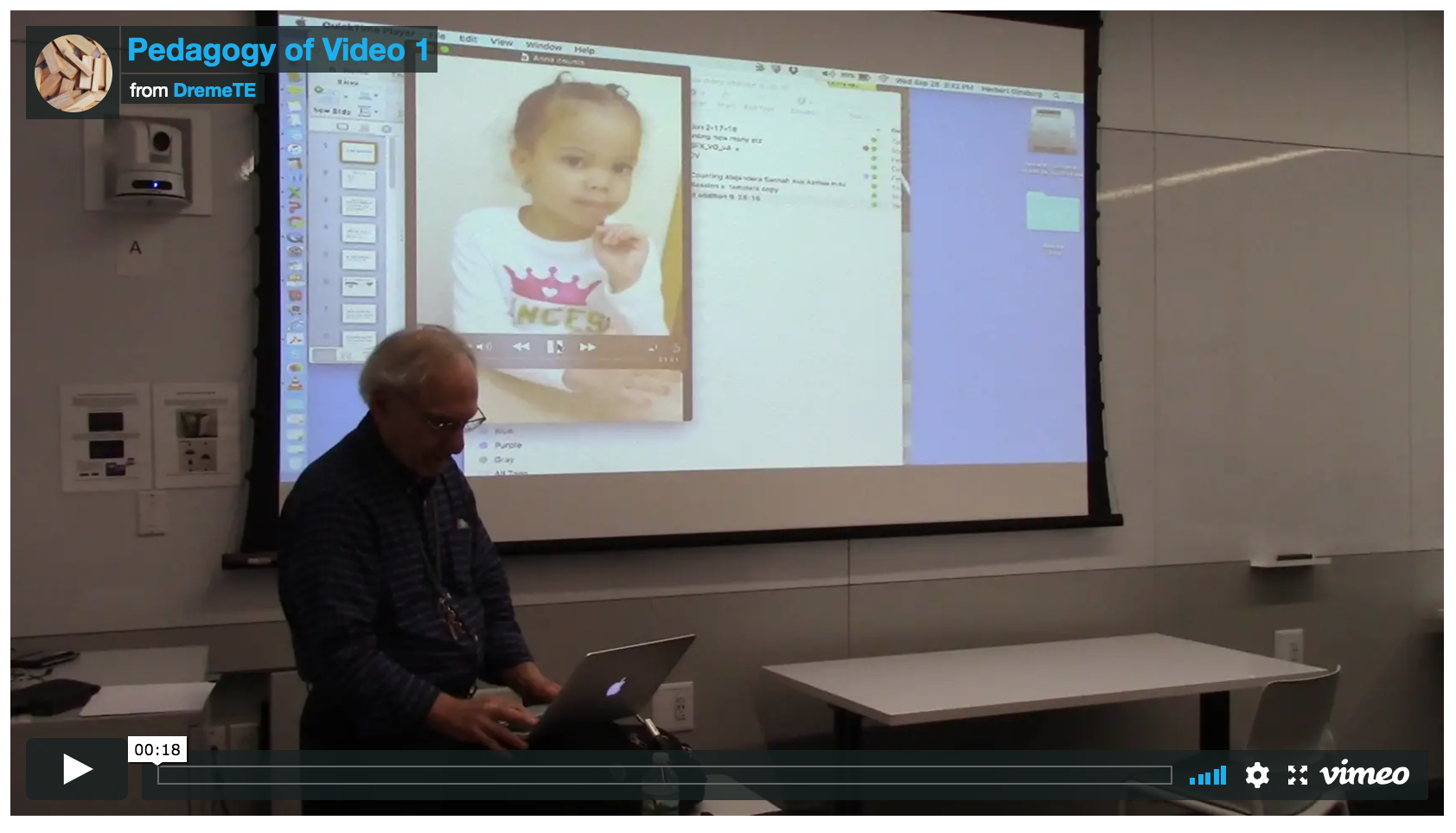
Video used in teacher learning settings is a powerful tool for engaging participants in understanding children’s mathematical thinking. Yet by itself the video, no matter how wonderful, is not sufficient.
This article asserts that flexible assessment plays a central role in successful education. Flexible assessment includes careful attention to each child’s productions, close observation of their behavior, and flexible interviewing of individual children.
This paper elucidates the Common Core’s vision of sound Mathematical Practices for young children, including reasoning abstractly and making sense of problems. by Linda M. Platas
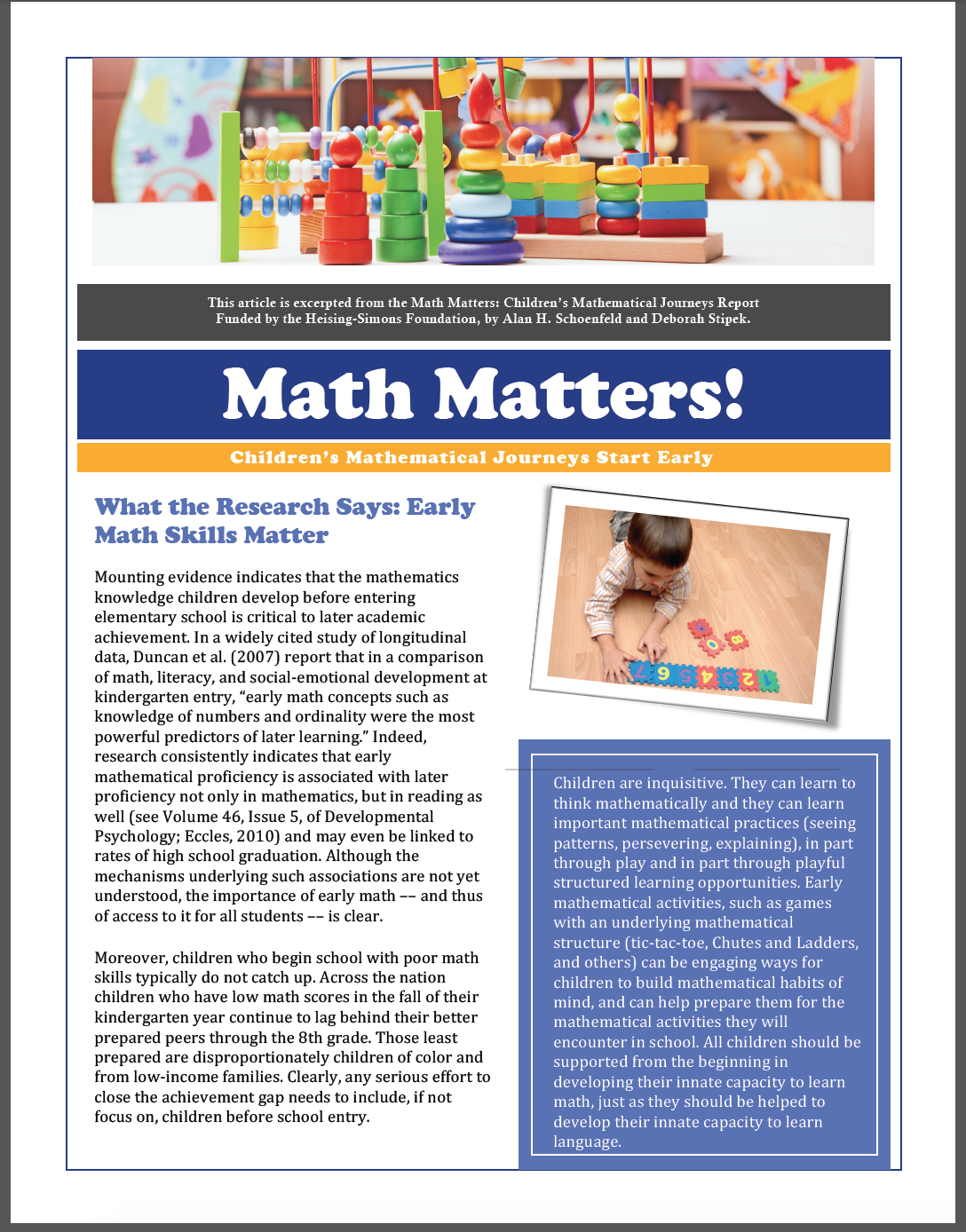
This handout is excerpted from Math Matters: Children’s Mathematical Journeys Start Early, a report funded by the Heising-Simons Foundation. by Alan H. Schoenfeld and Deborah Stipek