This page consists of video clips that are designed to illustrate assessing students using the measurement assessment protocol. Please visit the Counting and Enumeration Assessment Protocol for more details.
A thinking story about one child’s counting from one to 99 (she says she has to ask her mother about what comes after that). A thinking story is a written narrative presented along
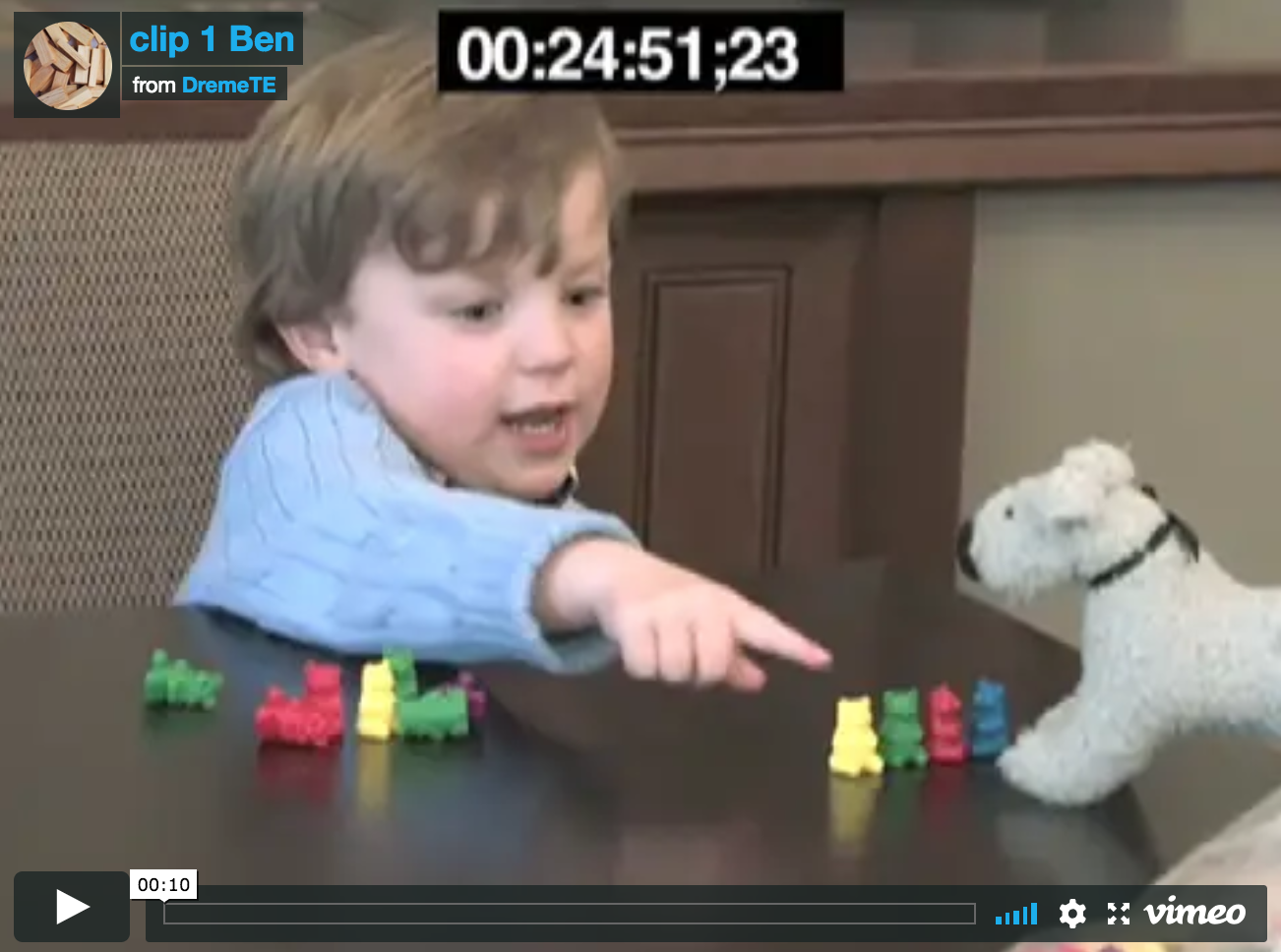
Learning to count is more than memorizing the words from one to ten. Memory is crucial, but so are ideas. Ben’s example can help you understand this. by Herbert P. Ginsburg
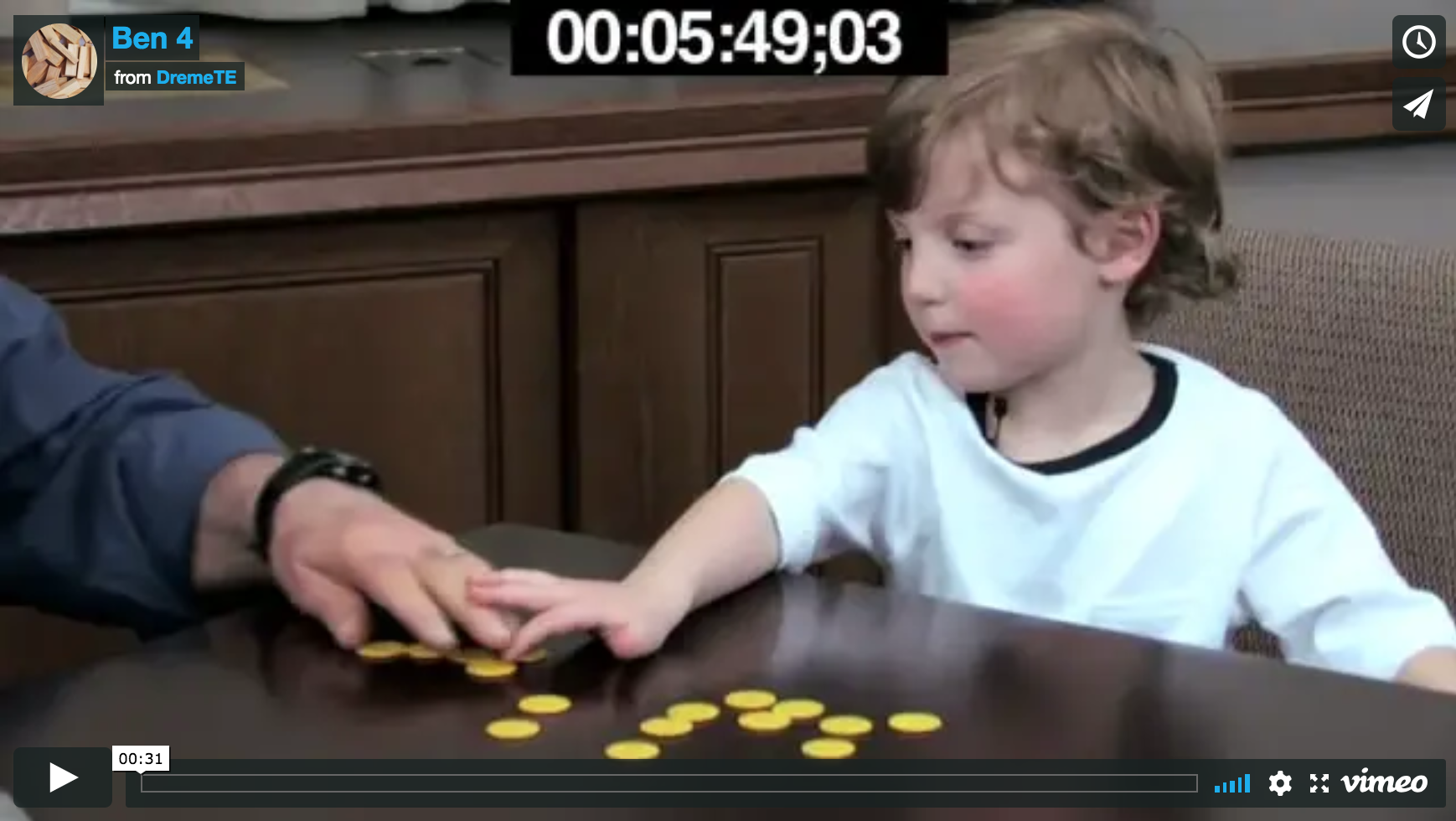
The idea of how many is deep, abstract, and cognitively demanding, involving learning number words and figuring out of the number of objects in a collection. Ben illustrates learning what how many really means.by Herbert
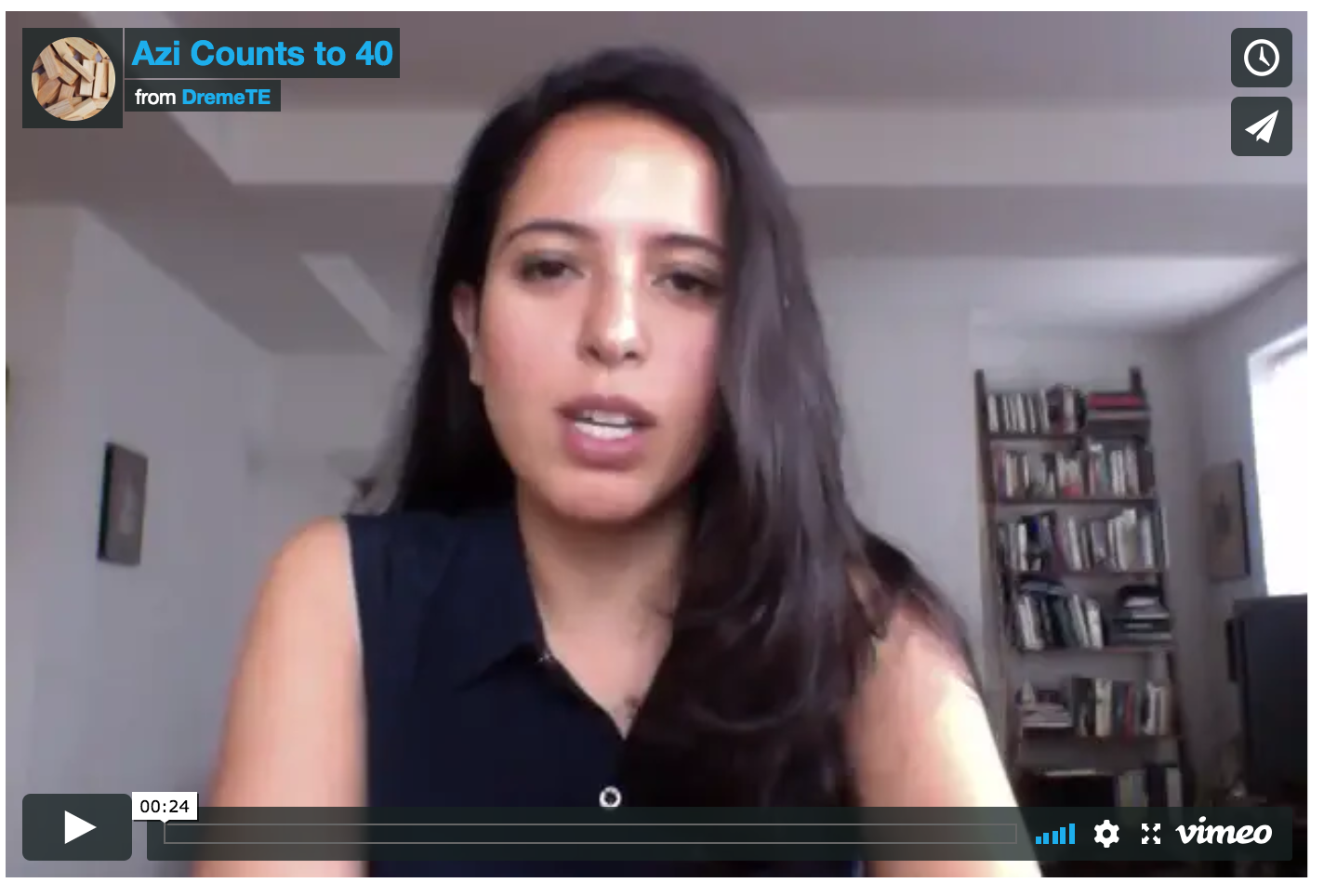
In this activity prospective or practicing teachers attempt to learn to count in a foreign language (Farsi). The experience is designed to help them understand how children feel when they learn to count,
This activity was developed for our graduate students (prospective early childhood teachers). It helps adults to understand how determining how many can involve many different strategies and ideas.by Herbert P. Ginsburg
This account describes how number develops in the preschool range, from about 3-5 years, and provides a detailed overview of the various skills and understandings that children need in order to achieve competence
Counting in preschool and the early elementary years supports the development of a variety of other mathematical abilities. Patterning, part-whole relationships, place value, composition and decomposition, equivalence, operations, and magnitude